

Many tarot readers struggle with unclear outcomes and inconsistent results in their readings due to lack of structure. A well-designed workflow blending traditional and digital methods dramatically improves reading clarity, client engagement, and spiritual connection. This guide shows you how to build an effective tarot card reading workflow for practical, meaningful results that resonate with both you and your clients.
Table of Contents
- Introduction To Tarot Reading Workflows
- Prerequisites For A Successful Tarot Reading
- Step-By-Step Tarot Reading Workflow
- Choosing And Using Effective Tarot Spreads
- Common Mistakes And Troubleshooting In Tarot Reading
- Expected Results And How To Measure Success
- Conclusion And Next Steps
- Boost Your Tarot Practice With StarMoonTarot
- Frequently Asked Questions
Key takeaways
| Point | Details |
|---|---|
| Building a workflow increases tarot reading clarity | Structured approaches reduce confusion and enhance intuitive connection during readings. |
| Preparation with the right tools and environment is crucial | Proper deck selection and sacred space setup set the foundation for accurate insights. |
| Step-by-step reading process balances intuition and structure | Following a consistent sequence from question clarification through follow-up improves outcomes. |
| Choosing the right spread impacts reading effectiveness | Matching spread complexity to question type guides interpretation flow and client understanding. |
| Avoiding common mistakes improves accuracy and client trust | Awareness of pitfalls like rushed shuffling and vague questions increases satisfaction rates. |
Introduction to tarot reading workflows
Tarot reading is evolving rapidly in 2026 to incorporate hybrid workflows blending in-person and digital tools. These practical systems help readers focus their intuition while delivering actionable insights clients can immediately apply. A clear workflow transforms scattered readings into trusted guidance sessions that deepen spiritual connection.
The modern tarot landscape demands scalability without sacrificing authenticity. Hybrid methods enable you to serve more clients while maintaining the depth and personal touch that makes tarot powerful. Digital tools like session recordings and follow-up worksheets extend the reading's impact beyond the initial consultation.
Pro Tip: Start simple with a three-step workflow covering preparation, reading, and follow-up before adding complex layers.
Building your workflow doesn't require abandoning traditional practices. Instead, you're creating a framework that supports your intuition rather than restricting it. This pragmatic approach makes tarot readings more effective and builds client trust through consistent, high-quality experiences.
Key benefits of structured workflows include:
- Reduced mental preparation time before each session
- Clearer communication of insights to clients
- Better tracking of client progress over multiple readings
- Increased confidence in your interpretive abilities
- Scalable practice growth without burnout
Think of your workflow as a container for sacred work. The structure holds space for intuition to flow freely while ensuring nothing important gets overlooked. This balance between system and spontaneity defines modern tarot excellence.
Prerequisites for a successful tarot reading
Before launching into readings, you need foundational tools and knowledge. Your tarot deck should feel intuitive and match your reading style. The Rider-Waite deck remains the gold standard for beginners due to its clear symbolism and extensive interpretation resources.
Creating a dedicated reading space matters more than most realize. This physical or digital environment should feel sacred and free from distractions. Simple cleansing rituals like burning sage or setting intentions help transition your mindset into reading mode.
Essential prerequisites checklist:
- Tarot deck aligned with your intuitive style
- Quiet, clutter-free reading space
- Basic knowledge of major and minor arcana meanings
- Familiarity with 3-5 common spreads
- Digital recording tools for hybrid sessions
- Journal for tracking reading insights and patterns
| Prerequisite | Purpose | Recommended Resources |
|---|---|---|
| Intuitive tarot deck | Foundation for all readings | Rider-Waite, Modern Witch, Wild Unknown |
| Sacred space | Mental focus and spiritual connection | Dedicated corner, cleansing tools, soft lighting |
| Card knowledge | Interpretation baseline | Guidebooks, online courses, practice journals |
| Spread familiarity | Reading structure options | Celtic Cross, Past/Present/Future, Relationship spread |
| Digital tools | Hybrid workflow support | Recording apps, email templates, cloud storage |
Pro Tip: Keep a quick reference sheet of card meanings near your reading space until they become second nature through practice.
Your environment setup directly impacts reading quality. Soft lighting, comfortable seating, and minimal visual clutter help you and clients stay present. For online sessions, test your camera angle and audio quality beforehand to maintain professional standards.

Invest time learning card combinations and how they modify each other's meanings. A single card rarely tells the full story. Understanding how The Tower's upheaval changes when followed by The Star's hope creates richer, more nuanced readings that clients remember.
Step-by-step tarot reading workflow
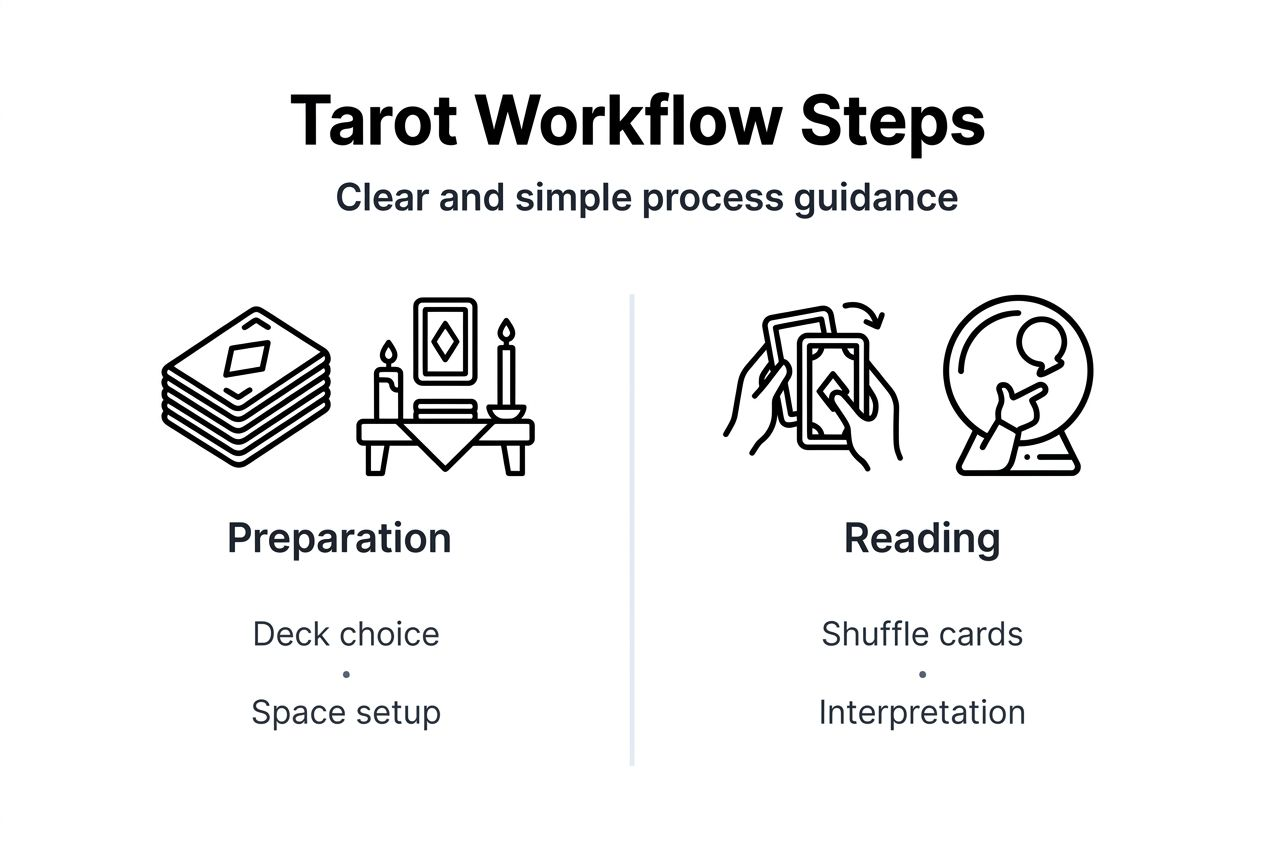
A consistent reading sequence creates reliability while leaving room for intuitive insights. This seven-step process works for both in-person and online sessions, adapting easily to different client needs and question types.
-
Prepare your environment and tools deliberately to shift into reading mindset. Light candles, clear your space, and set a clear intention for the session.
-
Clarify the client's question through conversation until you understand their true concern. Vague questions produce vague readings, so dig deeper with follow-up inquiries.
-
Shuffle cards mindfully without rushing or mechanical motions. This physical act engages your intuition and allows the right cards to surface naturally.
-
Select and lay out an appropriate spread matching question complexity. Simple yes/no questions need only three cards while life-path readings require more elaborate layouts.
-
Interpret cards by blending traditional meanings with situational context and your intuitive hits. Speak directly about practical actions rather than abstract concepts.
-
Provide follow-up materials like session recordings or interpretation worksheets. This extends the reading's value and gives clients reference points for reflection.
-
Maintain transparent communication especially for online formats to build lasting trust. Clearly explain your process and invite questions throughout.
Pro Tip: Record yourself doing practice readings to identify verbal tics and improve your explanation clarity.
The shuffling phase deserves special attention because it bridges logical preparation with intuitive reception. Some readers prefer cutting the deck three times, others shuffle until they feel called to stop. Find your method and stick with it for consistency.
When interpreting cards, avoid simply reciting memorized meanings. Connect each card's symbolism to the client's specific situation with concrete examples. If The Eight of Pentacles appears for a career question, discuss how dedicated skill building applies to their current job challenges.
Digital follow-up transforms one-time readings into ongoing guidance relationships. Send a photo of the spread layout with brief notes on each card's position and meaning. Clients appreciate having something tangible to revisit when making decisions referenced in the reading.
Choosing and using effective tarot spreads
Spread selection directly impacts reading depth and client understanding. Match your layout to the question's complexity rather than defaulting to familiar patterns. The Celtic Cross spread excels at mapping complex life questions through its comprehensive 10-card structure.
For quick clarity on straightforward situations, the Past/Present/Future three-card spread delivers focused insights without overwhelming details. This simplicity helps newer readers build confidence while still providing valuable guidance.
| Spread Type | Best For | Card Count | Complexity Level |
|---|---|---|---|
| Celtic Cross | Comprehensive life questions | 10 | Advanced |
| Past/Present/Future | Quick situation clarity | 3 | Beginner |
| Relationship spread | Partnership dynamics | 7 | Intermediate |
| Career path | Professional direction | 5 | Intermediate |
| Yes/No | Binary decisions | 1-3 | Beginner |
Specialized spreads for relationships or career inquiries provide targeted frameworks that guide interpretation naturally. A relationship spread might position cards to represent each partner's perspective, shared challenges, and potential outcomes. This structure prevents you from missing important dynamics.
Common spread selection guidelines:
- Use 3-card spreads for time-sensitive or simple questions
- Apply 5-7 card spreads for moderate complexity situations
- Reserve 10+ card spreads for major life decisions or annual readings
- Explain spread structure to clients before laying cards
- Keep spreads manageable to avoid interpretation paralysis
Pro Tip: Create a personal spread reference guide with notes on when each layout worked best in past readings.
Explaining the spread's logic to clients before revealing cards sets proper expectations and helps them engage more deeply with the reading. Walk them through each position's meaning so they understand how the narrative will unfold.
Avoid the trap of using overly complex spreads for simple questions. A 15-card spread about whether to accept a job offer creates confusion rather than clarity. Save elaborate layouts for genuinely multifaceted situations requiring comprehensive examination.
Common mistakes and troubleshooting in tarot reading
Even experienced readers fall into workflow traps that diminish reading quality. Rushing the shuffle phase appears as the primary cause of less effective readings in practitioner surveys. Slow down and let cards mix naturally rather than mechanically preparing the deck.
Unclear client questions produce unfocused readings that satisfy no one. Always clarify intent through conversation before pulling cards. Ask what specific decision or situation prompted them to seek guidance today.
Frequent workflow pitfalls to avoid:
- Mechanical card interpretation without considering client context
- Failing to explain your reading process to nervous first-time clients
- Neglecting follow-up communication after online sessions
- Over-relying on memorized meanings instead of intuitive hits
- Reading for yourself when emotionally invested in outcomes
- Skipping the environment preparation ritual
Balancing learned card meanings with situational intuition challenges many intermediate readers. You studied the guidebook thoroughly but now readings feel stiff and disconnected. Trust your intuitive impressions even when they diverge from traditional interpretations.
Pro Tip: If a reading feels stuck or confusing, pause to ask the client what resonates so far before continuing.
Mistake correction led to a 60% increase in client-reported clarity among practitioners who implemented structured troubleshooting. Document patterns in your difficult readings to identify personal blind spots and growth areas.
Online readings introduce technical challenges that disrupt flow if not addressed proactively. Test your internet connection, camera angle, and audio quality before client sessions. Have a backup communication method ready in case technical issues arise mid-reading.
Regular reflection on your readings builds skill faster than simply doing more sessions. Review your notes weekly to spot interpretation patterns, accuracy trends, and areas needing deeper study. This deliberate practice separates good readers from great ones.
Expected results and how to measure success
Structured workflows produce measurable improvements in reading quality and client satisfaction. You should see clearer insights emerging naturally during sessions and clients expressing greater confidence in applying your guidance to real situations.
Key performance indicators track your workflow's effectiveness over time. Client clarity rates above 85% and repeat booking rates around 75% indicate you're delivering genuine value. These metrics provide objective feedback beyond subjective feelings about session quality.
| Success Metric | Target Range | How to Track |
|---|---|---|
| Client clarity feedback | 85%+ positive | Post-session surveys |
| Repeat client bookings | 70-80% | Booking system analytics |
| Follow-up material engagement | 60%+ open rate | Email tracking, download stats |
| Personal confidence score | Increasing trend | Weekly self-assessment journal |
| Preparation time reduction | 30% decrease over 3 months | Session prep logs |
Digital tools make feedback collection seamless when integrated into your workflow. Send a brief survey link after each session asking clients to rate clarity, actionability, and overall experience. This data reveals trends invisible during individual readings.
Realistic workflow outcomes to expect:
- Reduced pre-session anxiety as your process becomes automatic
- Faster card interpretation without sacrificing depth
- More confident communication of challenging messages
- Better client retention through consistent quality
- Decreased post-session fatigue from improved energy management
Pro Tip: Track your energy levels before and after readings to identify which workflow elements drain or sustain you.
Reader confidence grows naturally when you stop second-guessing every interpretation. Your structured workflow provides guardrails that let intuition flow freely within a trusted framework. This psychological shift often matters more than technical skill improvements.
Positive engagement with follow-up materials indicates clients value your readings enough to revisit them during decision-making moments. A 30% engagement increase shows your aftercare approach resonates and extends the reading's practical impact beyond the session itself.
Conclusion and next steps
Adopting a structured tarot reading workflow transforms scattered sessions into trusted guidance experiences that clients remember and return for. The hybrid digital approach combining traditional wisdom with modern tools positions your practice for scalable growth without sacrificing spiritual depth.
Your workflow should evolve as you gain experience and discover what works best for your unique style. Regular reflection on what's working and what needs adjustment keeps your practice fresh and effective. Small refinements compound over time into significant quality improvements.
"A structured workflow doesn't limit intuition, it creates the conditions for intuition to flourish consistently across every reading."
Start implementing these methods immediately in your next reading. Choose one workflow element to focus on first rather than overhauling everything at once. Mastery comes through deliberate, incremental practice guided by clear feedback loops.
Boost your tarot practice with StarMoonTarot
Ready to deepen your tarot skills with expert guidance and cutting-edge tools? StarMoonTarot offers comprehensive resources designed specifically for readers committed to workflow excellence and spiritual growth.
Explore our curated tutorials covering advanced interpretation techniques, hybrid session management, and client communication mastery. Whether you're refining your existing practice or building one from scratch, our platform provides the structured support you need to deliver consistently powerful readings.
Frequently asked questions
What is a tarot card reading workflow and why is it important?
A tarot card reading workflow is a structured sequence of steps guiding the reading process from preparation through follow-up. It ensures clarity, balances intuition with structure, and produces actionable insights clients can immediately apply to their situations.
How do digital tools enhance a tarot reading workflow?
Digital tools enable session recordings, follow-up worksheets, and clearer communication that enhances client reflection and engagement long after the reading ends. They make hybrid readings scalable while maintaining the personal connection that makes tarot powerful.
What common mistakes should I avoid in tarot readings?
Avoid rushing card shuffling, accepting vague client questions without clarification, and relying too heavily on memorized meanings instead of intuitive context. Maintain clear communication especially in online sessions to build trust and ensure clients understand your process.
How can I measure the success of my tarot readings?
Track client feedback ratings focusing on clarity and actionability, monitor repeat booking rates, and measure engagement with follow-up materials you provide. Reflect regularly on your personal confidence levels and how much preparation time you need as indicators of growing mastery.